
Whether you’ve recently become self-employed, are looking to do so soon, or have been a sole trader for a while, tax laws change and the path to tax-efficiency and compliancy can be a long one. It is crucial that you come to understand your obligations and rights as a sole trader in the UK according to HMRC, and just as important that you learn how to keep records and file your taxes efficiently to make the most out of your income.
UWM Accountants’ guide to bookkeeping for sole traders covers everything you might need to know, from the definition of a sole trader and top tips on accounting for sole traders, to keeping records, filing taxes, claiming expenses, and making your money work for you.
Am I a sole trader?
First thing’s first, what is a sole trader and could you be one?
A sole trader is a type of business structure subject to specific tax requirements by HMRC. This structure is usually applied to, or adopted by, self-employed individuals. To be a sole trader in the UK, you alone must be responsible for generating and collecting your own income.
You must register as sole trader if your self-employed income exceeds £1,000 per year—though you can choose to register before you hit this threshold, too, which some people do because the status comes with a range of different benefits.
How to register as Self-Employed
If you are already making £1k+ per year through self-employed channels and are yet to register as self-employed with HMRC, you must do so ASAP. If you plan to be making over £1k per year as a self-employed person in the near future, then you can choose to proactively register to get ahead of the game. The process of registering a self-employed is relatively straightforward and explored in full detail in another of our blogs.
What is bookkeeping for sole traders vs accounting for sole traders?
You may be wondering how ‘bookkeeping’ and ‘accounting’ for sole traders differ.
In essence, accounting is the practice of managing your accounts—your incomings and outgoings, cash flow and expenses, etc. with the goal of achieving profitability as a small, self-employed business entity.
Bookkeeping for sole traders also involves account management, but refers more specifically to managing your accounts and keeping records for the purpose of paying tax, National Insurance, VAT and/or PAYE contributions for anyone you may employ.
Choosing the right accounting method
When it comes to accounting for sole traders, there are two principle ‘methods’ you can choose from: ‘cash basis’ and ‘traditional.’
Cash basis accounting is a method of accounting by which you record your income and expenses when you physically receive money or pay a bill. I.e., when filing your end-of-year Self Assessment tax return, you need only record and pay income tax on money you have received during the tax year—any outstanding invoices are not included, nor are invoices for expenses you’ve yet to settle.
Traditional accounting, on the other hand, is an accounting method whereby you record and pay income tax/register expenses on all invoices and bills you receive, according to the dates they were issued, rather than when they were settled.
Of course, the method you select is up to you—you must simply inform HMRC of the method you choose to operate by, and inform them if this changes.
Exploring your bookkeeping obligations as a sole trader
As a sole trader, you are obligated to record, file and pay taxes by yourself (if not with a personal tax advisor’s assistance). HMRC asks that you keep records for at least six years before disposing of them, since the tax authority can and does conduct random checks into businesses to ensure they are tax compliant. Below is a list of the various bookkeeping and accounting obligations of a sole trader in the UK.
- You must keep clear, accurate records of your business sales, business and personal income (if these differ), and your expenses (both those which are ‘allowable’—thus tax-deductible—and those which are not).
- You must submit an annual Self Assessment tax return and pay income tax on your profits.
- You must pay Class 4 National Insurance contributions and, depending on your annual profits, may be required to pay Class 2 National Insurance as well (though this was effectively abolished in the Spring budget for 2024.
- You must register for VAT if your turnover exceeds the VAT threshold of £85,000pa. If this applies to you, you must also keep all VAT records and receipts.
- Many sole traders will likely not exceed the £85k turnover threshold for VAT, but all can still consider voluntarily registering for VAT if they believe doing so might benefit them.
- You must pay any staff you employ, withhold their PAYE contributions, and keep accurate, up-to-date payroll records.
- And finally, you must take full responsibility for any debt your sole trader business accrues.
Digital or physical paper records?
It is worth briefly noting that paper records were, once upon a time, the only type of bookkeeping record a sole trader (or anyone, for that matter) could keep. Recently, however, HMRC has introduced their Making Tax Digital (MTD) scheme in an effort to fully digitise and thus streamline the tax filing and collection process across the UK.
As such, it is no longer recommended to keep paper records, but rather to keep digital ones and to digitise any paper ones you accrue throughout the year (such as making a scanned PDF copy of business expense receipts).
Allowable expenses you can claim as a sole trader
As a self-employed business, you are allowed to claim a variety of your annual expenses against your income, before paying income tax. Only expenses deemed ‘allowable’ by HMRC can be claimed, but the categories do tend to be fairly far-reaching and so it is important you are aware of the various types of expenses you can legitimately deduct. Below is a non-exhaustive list.
- Office supplies: For example, a printer, printer ink and paper, pens, notebooks and other stationery.
- Business travel and accommodation: Travel and accommodation expenses incurred when travelling for business purposes, for example to meet a client or conduct market research.
- Commodities you buy to sell on: For example, stock or raw materials.
- Insurance and other financial costs: Like bank charges or contents insurance for your business premises.
- Expenses related to your business premises: Such as utilities, rent, internet bills, and phone bills.
- Note: If your ‘business premises’ is also your home, you can still make a claim for some related costs.
- Expenses related to promoting your business: Marketing costs, website hosting costs, and so on.
- Employee training: Any expenses incurred in training and onboarding your employees (if relevant).
Paying tax as a sole trader
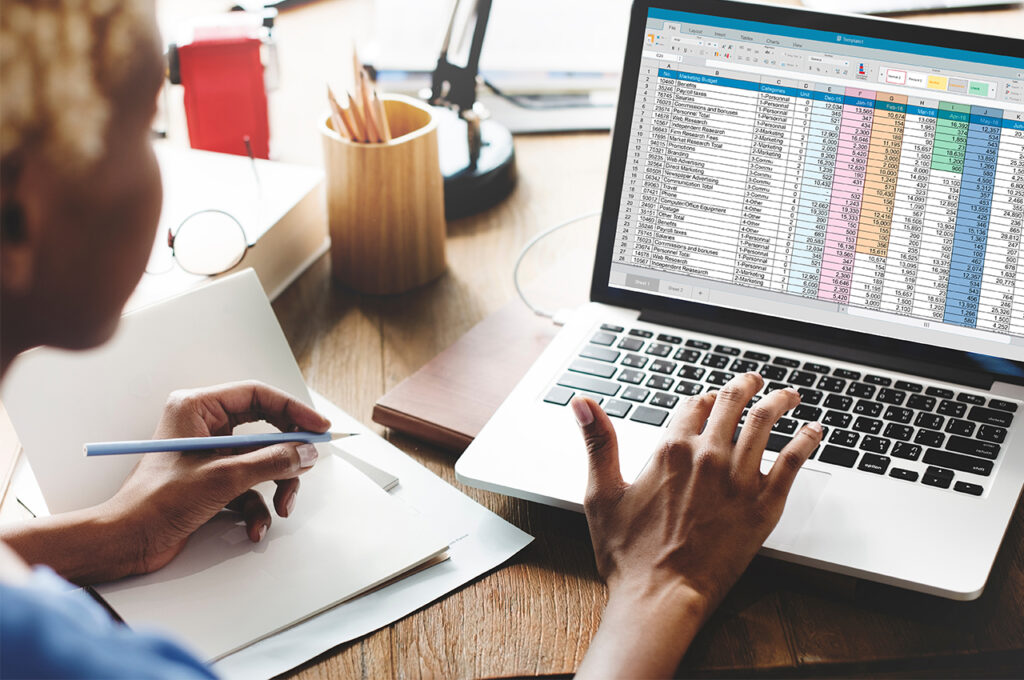
You’ve learned what a sole trader is and how to become one, and you’ve explored your obligations and the allowable expenses you can claim against your income, but what about the tax you have to pay? As a sole trader, once you file your annual Self Assessment return, you will need to pay income tax and National Insurance at the very least. You may also have to pay a VAT bill and/or PAYE contributions for employees, if relevant.
Income tax
Like any other employed or self-employed person in the UK, sole traders must pay tax on the income they make each year. Income tax applies to your income after allowable expenses have been deducted (i.e., to your Net Profit, not Gross). You receive a tax-free Personal Allowance of £12,570, beyond which you must start paying tax. The rate of tax you pay on your income depends on the amount you make each year.
National Insurance contributions
National Insurance contributions go toward paying for various social benefits such as healthcare on the NHS and your state pension. Until recently, sole traders were obligated to pay both Class 2 and Class 4 National Insurance (because they were deemed, in effect, both the employer and employee). As of April 2024, however, most sole traders need only pay Class 4 contributions—the amount of which is again dictated by your income.
VAT
Only those sole traders who are VAT-registered, either voluntarily or by necessity, need pay a VAT bill on VAT charged to, and collected from, their customers and clients. Unlike a Self Assessment return, your VAT return is typically due one calendar month and one week from the end of your VAT accounting period.
PAYE
At some point in your career as a sole trader you may opt to hire staff. If you do, in addition to income tax and National Insurance, you will need to keep careful PAYE records, and must pay
HMRC relevant withholdings on your employees’ behalf. This can include:
- Keeping records of employee pay as well as any deductions you make on their behalf, e.g., to pension schemes.
- Keeping record of all employee absences, including holiday leave, paternity, and sickness.
- Keeping record of all expenses or benefits incurred by your staff.
Tips on how to be more tax-efficient as a sole trader
We’ll close out our guide to accounting for sole traders with a few key tips on how to be more tax-efficient—in other words, how to make your bookkeeping work in your favour, pay less tax, and ensure the continued profitability of your self-employed business.
1) Open a separate business bank account
This isn’t always a necessity, especially if your turnover is low or you operate as a freelance contractor with a manageable client portfolio, but it may still be something worth considering.
A separate bank account for your business can make sole trader accounting easier to track, manage, and optimise, since only income and expenses relating to your business are recorded there.
2) Use Cloud accounting software
Accounting software for sole traders is also very much worth your consideration. Cloud-based (i.e., online) accounting software is widely available and generally accessible via tiered subscription levels, so as to work with a variety of sole trader budgets. Accounting software packages like Xero or QuickBooks can automate much of your bookkeeping duties for you, all via a nice, friendly User Interface.
3) Keep accurate records, be aware of your rights, and pay tax on time
Your greatest tool when it comes to bookkeeping for sole traders is your own organisational skills. Nothing beats keeping on top of your records, organising them in an efficient and accessible way, and reviewing them regularly.
Additionally, it is key that you are ‘aware of your rights,’ which is to say: know what you can reasonably expense and make the most of these deductions. Lastly, of course, it is imperative you pay your tax on time to avoid any late fees or penalties!
4) Set aside a % of your profits for tax and National Insurance
There is nothing worse than getting through the tax year, organising your records, and filing your Self Assessment tax return just to discover you’ve no money left in the bank to pay your Income Tax and National Insurance bill.
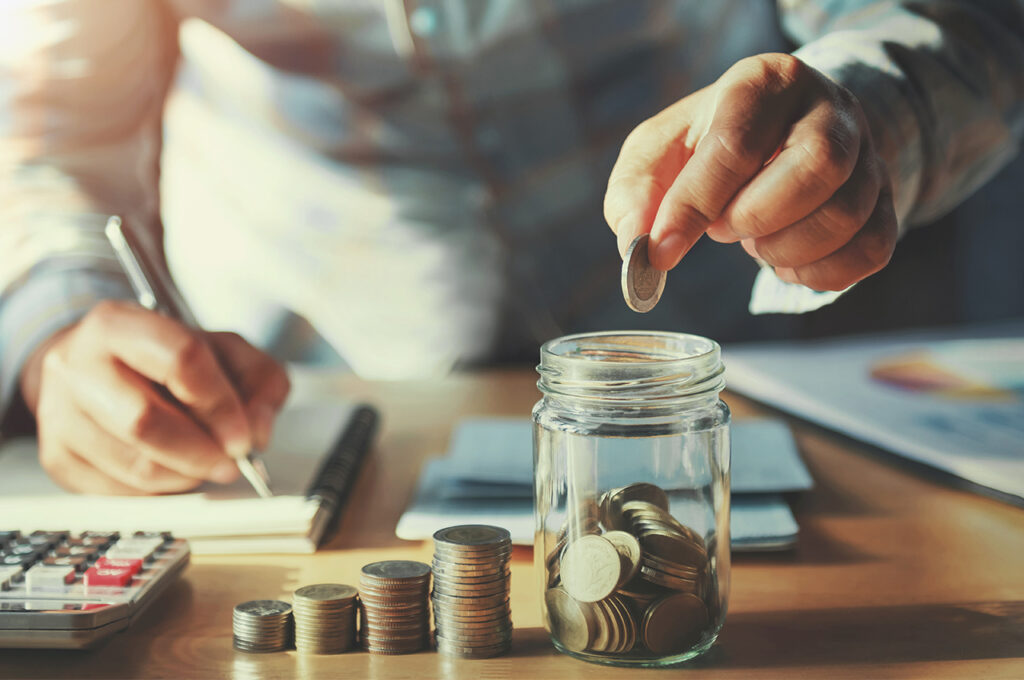
Typically, around 20% of your income will be taxed for income and 6% for NI. As such, it’s worth putting aside 25-30% of your monthly income in a savings account, so that when your tax bill arrives, you’ve the money to pay it already sitting waiting.
5) Contact a personal tax advisor for advice
Last but not least, we would be remiss if we didn’t reassure you that, oftentimes, juggling the management of a self-employed business and one’s sole trader accounts can prove to be too much. If you find yourself at a loss, feel like you could be saving more on your tax bill, or are generally just swamped by the demands of your work and sole trader bookkeeping, then it could be helpful to seek the advice of an accountant or Self Assessment tax professional.
Conclusion: Navigating accounting for sole traders
Bookkeeping for sole traders is an absolute necessity for the self-employed. In order to comply with UK tax law, sole traders must keep accurate accounting records for a minimum of six years from date of receipt, and must submit a Self Assessment return each year before paying their tax and NI bill in a timely fashion.
Sole traders can make the process as efficient as possible—even saving money whilst they do—by following the steps and tips outlined in this guide. Of course, should the demands of sole trader accounting become too much, or the tax jargon too confusing, you can also always turn to a tax and accountancy professional for some calming, personalised advice.
Explore more of the UWM blog to truly master your self-employed tax and accounting obligations.


